Hey there, gearheads and aerospace nerds alike – let’s talk about something that’s been quietly keeping planes, satellites, and even rockets moving for decades: planetary gear parts. As someone who’s been supplying these little workhorses for years, I’ve seen first-hand how they’re the unsung heroes behind almost every aerospace system you can think of. If you’ve ever wondered why planetary gears aren’t just for old bikes or lawnmowers, stick around – this is where the magic happens. Planetary Gear Parts

First off, let’s keep it real: aerospace isn’t your average industry. Every single component has to pull double (and triple) duty. It needs to be lightweight, tough enough to survive launch vibrations, precise enough to not mess up a satellite’s orbit, and efficient enough that you don’t waste fuel just turning a wheel. Planetary gears check all those boxes, and that’s why their applications span way beyond just “moving parts.”
Let’s start with the big one: aircraft systems. You fly on a plane every week, maybe, but how much do you notice about the parts that keep it in the air? Planetary gears are all over the place here. Take the landing gear, for example. When a plane lands, that thing slams down with tons of force, and the gear has to retract smoothly after takeoff. Planetary gear sets are used in the actuators that extend and retract landing gear because they can handle high torque without adding extra weight – a huge win for airlines, who fight over every pound to cut fuel costs. I’ve supplied gear parts to a few major aircraft manufacturers for their landing gear actuators, and let me tell you, there’s no room for error here. A gear that’s even a hair off could lead to a delay – or worse.
Then there’s the engine itself. Modern jet engines use planetary gears in their fan systems, especially in high-bypass engines like the ones powering Boeing 787s and Airbus A350s. Here’s why: a jet engine’s turbine spins super fast, but the fan needs to spin slower to be efficient. Planetary gears act like a middleman, connecting the high-speed turbine to the low-speed fan. This setup boosts fuel efficiency by like 15% compared to old gearless designs – that’s billions of gallons of jet fuel saved every year. I’ve worked with engine OEMs to custom-make gear parts for these systems, and it’s cool to know a part I supply is helping planes fly farther on less gas.
Next up: satellites. If you’ve ever looked up at the night sky and thought about all the satellites orbiting above, remember – they’re not just floating around. They need to point their solar panels at the sun, their antennas at Earth, and adjust their orbits now and then. All that movement? Planetary gears. Satellite attitude control systems (that’s the fancy term for “pointing stuff”) rely on tiny, super precise planetary gear sets. These gears have to work for years, even decades, in the harshness of space – no maintenance, no repairs, just constant use. I’ve supplied gear parts for small CubeSats and big communication satellites, and the specs here are insane. We’re talking tolerances measured in microns, materials that can handle radiation and extreme temperature swings. One tiny flaw, and a $100 million satellite is useless. That’s why aerospace customers trust us to deliver consistent, high-quality parts – no cutting corners.
Then there’s launch vehicles. Rockets are built to be light, fast, and powerful – and planetary gears play a role in their guidance systems and engine controls. For example, the thrusters that adjust a rocket’s trajectory use planetary gears to convert the small, precise movements of a motor into the force needed to steer the rocket through the atmosphere. Even the solid rocket boosters use gear parts in their ignition and separation systems. When a booster splits off from the main rocket, it needs to happen at exactly the right time, and gears make that smooth. I’ve had projects where we made gear parts for next-gen reusable rockets – companies that want to land boosters back on Earth for reuse. Those gears have to handle the stress of re-entry, and they have to work perfectly every single time, because if they don’t, the whole mission is toast.
Wait, let’s not forget about helicopters. Helicopters have it way harder than fixed-wing planes – their rotors have to spin at just the right speed to stay aloft, and they need to be able to adjust quickly. Planetary gears in helicopter main rotor drives handle that torque and speed adjustment. Unlike aircraft engines, helicopters need to be super agile, and their gear systems have to transmit huge amounts of power without weighing too much. I’ve supplied gear parts to military and civilian helicopter makers, and these parts go through brutal testing – salt spray, extreme cold, heavy vibrations. It’s rewarding to see our parts hold up when a crew’s life depends on it.
Now, let’s get into what makes planetary gears so perfect for aerospace, beyond just “they work.” The key is their compact, high-torque density. A planetary gear set can deliver way more torque in a smaller space than a traditional gear train. That’s non-negotiable in aerospace – every cubic inch and every gram counts. Also, they’re efficient. Planetary gears have less friction than other gear designs, so you’re wasting less energy as heat or noise. In space, where there’s no way to add coolant, low friction is huge. And they’re reliable – with multiple gear teeth sharing the load, if one tooth has a tiny flaw, the others pick up the slack. That’s a big deal for missions where you can’t just pop in a new part.
But here’s the thing: not all planetary gear parts are the same. Aerospace isn’t a one-size-fits-all industry. Some customers need tiny gears for CubeSats that fit in the palm of your hand. Others need big, heavy-duty gears for landing gear that can handle 100 tons of force. That’s why we don’t just sell off-the-shelf parts – we work with customers to custom-make gear components, whether it’s a specific gear ratio, a material that can handle space radiation, or a coating that resists wear. I’ve had a customer come to us with a weird, last-minute requirement for a satellite’s antenna drive – they needed a gear made from a special titanium alloy that’s both light and strong. We turned it around in a few weeks, and they’ve been coming back ever since. That’s the kind of partnership we value.
Now, let’s talk about the challenges. Aerospace parts have to meet strict standards – FAA approval, NASA specs, ISO aerospace certifications. We don’t cut corners here. Every part we supply goes through rigorous testing: load testing, vibration testing, corrosion testing. I remember a few years back, we had a batch of gear parts for a commercial aircraft program that failed a vibration test. Instead of trying to fix it, we started over. The customer appreciated that – because in aerospace, there’s no such thing as “good enough.” It’s gotta be perfect.
Also, aerospace is always pushing forward. We’re talking hypersonic vehicles, next-gen lunar landers, deep space probes that go to Mars or beyond. Planetary gears will be right there with them. For example, hypersonic planes need gear parts that can handle temperatures over 2,000 degrees Fahrenheit – hot enough to melt most metals. We’re working on new materials and coatings to make that happen. Lunar rovers need gears that can survive the moon’s 300-degree temperature swings and dust. That’s where our team’s creativity comes in. We’re not just a supplier – we’re problem-solvers.
If you’re in the aerospace industry – whether you’re an OEM working on a new plane, a satellite startup launching CubeSats, a rocket company building reusable launchers, or even a research lab testing a new space vehicle – chances are you need planetary gear parts that are precise, reliable, and built to last. We’ve been there, done that, and have the testing records to prove it. No matter your project’s size or spec, we can work with you to get the exact gear parts you need, when you need them.
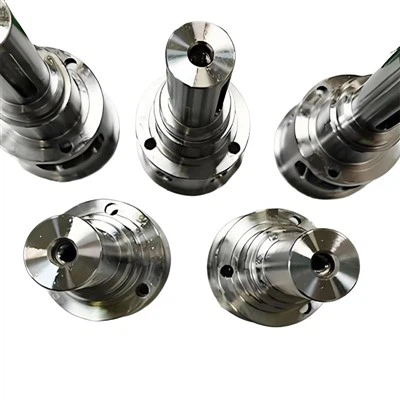
Don’t sleep on planetary gears. They’re the small, unassuming parts that make the biggest difference in aerospace. Without them, planes wouldn’t land smoothly, satellites wouldn’t point at Earth, rockets wouldn’t reach orbit. As a supplier, I’m proud to contribute to that. If you’re working on an aerospace project and need high-quality planetary gear parts, reach out to our team to start the conversation. We’re here to help you get the right parts, on time, every time.
Humanoid Robot Skeleton References:
- NASA. (2022). "Planetary Gear Applications in Spacecraft Systems." NASA Technical Report.
- International Organization for Standardization (ISO). (2021). "Aerospace Gear Component Specifications." ISO 10303-238.
- Society of Automotive Engineers (SAE). (2020). "Aerospace Planetary Gear Design and Testing Standards." SAE International.
- Boeing. (2019). "High-Bypass Engine Gear Systems for Commercial Aircraft." Boeing Technical Brief.
- European Space Agency (ESA). (2023). "Attitude Control Systems for Small Satellites." ESA Engineering Report.
Jiangsu Zhengfang Dynamics Technology Co., Ltd.
As one of the most professional planetary gear parts manufacturers and suppliers in China, we’re featured by quality products and good price. Please rest assured to buy customized planetary gear parts made in China here from our factory. Contact us for pricelist.
Address: Building 3, No. 69 Feitian Avenue, Jiangning District, Nanjing City, Jiangsu Province
E-mail: hanks.liu@zfdynamics.com
WebSite: https://www.zhengfangdongli.com/
