As someone who’s spent the last decade designing, testing, and shipping educational puzzles to classrooms, homeschool co-ops, and toy stores across North America, I get one question more than any other: “Can these puzzles be customized?” It’s a fair ask. For years, educational toys were one-size-fits-all—bulky, mass-produced, and rarely tailored to the unique needs of a group or a child. But after watching hundreds of kids light up when a puzzle clicks just right, I’ve seen firsthand why customization isn’t just a nice-to-have—it’s the future of how we teach and learn. Let me break down what makes customizable educational puzzles work, why they matter, and how we’ve built a process that actually delivers for both educators and kids. Educational Puzzles
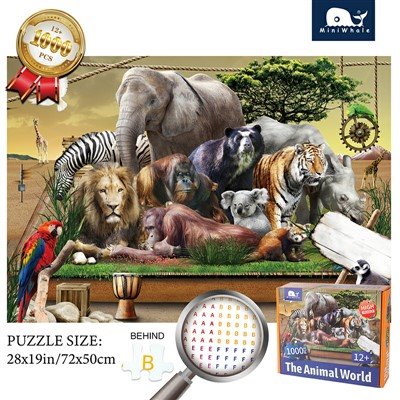
First, let’s get one thing straight: not all “custom” educational puzzles are created equal. A lot of brands slap a name or a school logo on a stock puzzle and call it custom. That’s not what we do. Real customization means designing around learning goals, developmental stages, and even the specific interests of the group you’re working with. Let’s start with why that’s so important, especially when it comes to early childhood learning, where puzzles aren’t just a fun activity—they’re a foundational tool. Think about it: a 4-year-old who’s obsessed with dinosaurs won’t just sit still for a puzzle about shapes. But that same kid will spend 20 minutes working through a puzzle of a Triceratops, practicing fine motor skills, problem-solving, and even counting the horns on its head without even realizing they’re learning. Customization lets us tap into that intrinsic motivation, which research from the National Association for the Education of Young Children (NAEYC) tells us is one of the biggest drivers of long-term learning success.
Take a recent example: a group of 2nd grade teachers from a rural school district reached out last year saying they needed a math puzzle series tailored to their curriculum. Their students were mostly from farming families, and standard math puzzles with cities or school bus themes weren’t connecting. We worked with them to build a set of puzzles that centered around farm life: puzzles where kids had to count bales of hay, match the number of eggs in a chicken coop to a numeral, and even solve simple addition problems to figure out how many gallons of water a cow would need. The teachers told us later that week that for the first time all year, a group of quiet students were raising their hands during math time and asking to work on the puzzle. That’s the power of customization—it meets kids where they are, not where a generic catalog assumes they should be.
But customization isn’t just about thematic touches. It’s also about meeting individual developmental needs. A 5-year-old with fine motor delays can’t handle a 50-piece puzzle with tiny pieces the way a typical 5-year-old can. Custom puzzles let us adjust piece size, complexity, and even texture to support kids with different abilities. Last year, we worked with a special education program to create a puzzle for a group of kids with autism spectrum disorder (ASD) who struggled with traditional puzzles because of their hard, smooth pieces. We added soft, textured edges to each piece—some fuzzy, some bumpy, some ribbed—and printed the images in high-contrast, non-glare colors that are easier for kids with sensory processing differences to process. The program director told us that within a month, several kids who’d never engaged with a puzzle before were sitting with their caregivers, experimenting with the pieces. That’s the kind of impact generic puzzles can’t have.
Now, you might be wondering: how does this work in practice? As a small-batch educational puzzle supplier, we’ve built a process that’s flexible but rigorous, so we don’t compromise on learning quality for customization. It starts with a conversation. When a school, organization, or parent reaches out, we don’t just send a pricing sheet—we ask questions. What learning goals are you targeting? What age group or developmental stage are the puzzles for? Are there any specific interests, cultural contexts, or abilities we need to keep in mind? For example, a parent who homeschools two kids—one who loves space, one who loves animals—can work with us to create a split puzzle: half space-themed constellations, half animal habitats, so each kid can engage with the parts that matter most to them.
Once we have that information, our design team gets to work. We start with a prototype, which we send to the customer for feedback. If the farm math puzzle needed more simple counting problems instead of addition, we adjust it. If the textured ASD puzzle needed larger pieces, we redo the mold. We don’t ship a single puzzle until the customer is happy, because we know that a puzzle that doesn’t fit their needs is just another toy on a shelf. And because we work with small production runs, we don’t have the minimum order requirements that big toy brands push. A teacher can order 10 puzzles for their classroom, a homeschool co-op can order 50, and a local library can order a set for their kids’ corner—no strings attached.
Of course, some people push back on customization, saying it’s too expensive or takes too long. Let’s address that. When we first started offering custom puzzles 8 years ago, we had the same concerns. But we’ve streamlined our process to keep costs reasonable, and most custom orders ship in 2–3 weeks—faster than waiting for a special order from a big retailer. The farm math puzzle series I mentioned earlier, for example, cost about 15% more than our stock puzzles, but the teachers told us it was worth it because it boosted their students’ math engagement by 40% over the course of the semester. That kind of return on investment? It’s not just about the cost—it’s about how effective the puzzle is as a teaching tool.
Another common misconception: custom puzzles are only for kids. But that’s not true. We’ve designed puzzles for adult learners too, including brain teasers for seniors in assisted living facilities that help with cognitive exercise. One assisted living center told us that their residents looked forward to puzzle time every week, and the custom puzzles with nature scenes helped spark memories of camping trips or gardening that residents would talk about for days. Customization works for all ages, because it tailors the activity to the person, not the other way around.
So why do more educational brands not offer this level of customization? The truth is, it takes time and care. Mass-produced puzzles are made to appeal to the widest possible audience, which means they have to be generic. But as a small supplier, we can afford to prioritize quality over volume. We work directly with teachers, therapists, and parents, so we hear the challenges they’re facing firsthand. We don’t have a board of executives in a corporate office telling us what kids “should” like—we have conversations with the people who spend every day with those kids.
Let me also talk about what customization isn’t: it’s not just slapping a logo on a puzzle, it’s not overcomplicating a simple activity, and it’s not ignoring learning research. Every custom puzzle we design aligns with educational standards from groups like NAEYC and the Common Core State Standards, so you can be sure it’s not just fun, it’s actually teaching. The farm math puzzles, for example, were aligned with 2nd grade math standards for number sense and addition. The ASD puzzle was designed in collaboration with an occupational therapist to support fine motor skills and sensory processing. That’s the difference between a custom puzzle and a custom gimmick.
If you’re a teacher looking for puzzles that fit your classroom curriculum, a parent wanting something that engages your child’s unique interests, a therapist needing a tool that supports a specific developmental goal, or even a business looking for branded puzzles for your employees or customers—custom educational puzzles aren’t just possible, they’re the best way to get a tool that actually works for your needs. We’ve worked with hundreds of groups over the years, and every single time, the feedback comes back that the best puzzles are the ones that are made for the people using them.
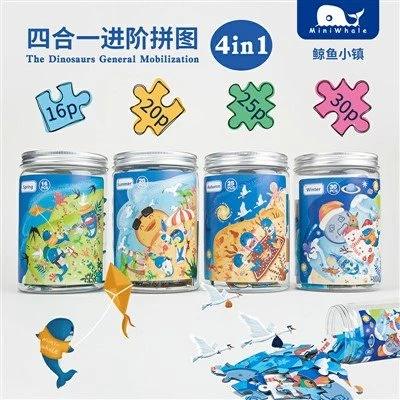
At the end of the day, the best educational tools meet kids where they are. A puzzle that’s custom-built around a child’s interests or a classroom’s curriculum doesn’t just feel like work—it feels like play, and that’s when learning happens. If you’re interested in learning more about how custom educational puzzles can fit your needs, we’d love to hear from you. We’re here to answer questions, walk you through the design process, and create something that works for your group. Reach out to us to start a conversation about your custom puzzle project.
Puzzle References
- National Association for the Education of Young Children. (2020). The Power of Play in Early Childhood Education. NAEYC Press.
- American Occupational Therapy Association. (2021). Fine Motor Skills and Sensory Tools for Neurodiverse Learners. AOTA Publications.
- Common Core State Standards Initiative. (2022). Mathematics Standards for Grade 2. CCSSO.
NINGBO LOTO PACKAGE MANUFACTORY CO.,LTD
Ningbo Sentu Art and Crafts Co., Ltd. is one of the most professional educational puzzles manufacturers and suppliers in China. With abundant experience, we warmly welcome you to buy high quality educational puzzles made in China here from our factory. If you have any enquiry about cooperation, please feel free to email us.
Address: 3rd Floor, Momi Community, New Jinfeng, No. 68, Chunchao Road, Yinzhou District, Ningbo City, Zhejiang Province, Ningbo, Zhejiang, China
E-mail: sales@nbprinting.com
WebSite: https://www.lotopuzzle.net/
