What is the surface finish of drilled holes in steel?
When I’m on the shop floor talking to customers—whether they’re aerospace machinists, automotive part fabricators, or small job shop owners—one question comes up almost as often as “what’s the lead time for your drill bits?”: “What is the actual surface finish I can expect from drilled holes in steel?” It’s not a trivial question, either. Surface finish in drilled holes directly impacts how well parts fit together, their resistance to corrosion, fatigue life, and even how they hold up under load. As someone who’s been a drilling steel supplier for over 15 years, I’ve seen firsthand how a misunderstanding of this topic can lead to scrap parts, missed deadlines, and unnecessary costs. Let’s break this down in terms that matter to people who actually work with steel every day, not just textbook definitions. Drilling Steel

First, let’s get clear on what surface finish means here. When we talk about surface finish in machining, we’re referring to the vertical and horizontal irregularities on the hole’s inner surface—measured in Ra (arithmetic average roughness), Rz (mean peak-to-valley height), or Rmax (maximum peak-to-valley height). For drilled holes, most specs are in Ra values, usually ranging from 0.8 microns (32 micro-inches) for precision applications up to 6.3 microns (250 micro-inches) for general steel parts. But here’s the thing: that number isn’t a fixed value. It depends on way more than just the drill bit. If you’re drilling mild steel vs. stainless steel, using a high-speed steel (HSS) drill vs. a carbide drill, or running your spindle too fast or too slow, you’re going to get a very different surface finish.
Let’s start with the basics of how drilling creates surface irregularities. When a drill bit spins and cuts into steel, the two main things that cause roughness are “feed marks” and “built-up edge (BUE).” Feed marks are the spiral ridges left behind as the drill moves forward through the material. If your feed rate is too high, those ridges are deep—so your Ra value is high. If you run the feed too slow, the drill can rub instead of cut, generating heat that makes BUE form: tiny chunks of steel that weld to the drill’s cutting edges, tear out pieces of the hole wall, and create a rough, uneven surface. That’s a big one for steel, especially softer grades like 1018 mild steel. I’ve seen customers run HSS drills at feeds so low that BUE builds up after just 10 holes, turning a supposed Ra of 3.2 microns into something closer to 12 microns—enough to make a hydraulic seal leak or a bearing seat wear out fast.
Now, let’s talk about variables that you can control, since that’s what matters for someone sourcing drilling solutions. First, the drill bit material. HSS drills are the workhorses for steel, but they have limitations. For low-to-medium volume drilling of mild steel, HSS can get you consistent Ra values between 1.6 and 6.3 microns if you set parameters right. But for higher volume, or for harder steels like 4140 or stainless steel 304, carbide drills are non-negotiable. Carbide is stiffer, holds a sharp edge longer, and resists heat better. A good carbide drill will deliver Ra values between 0.8 and 3.2 microns in most steels, even at higher feed rates that keep your production fast. I remember a customer in the agricultural equipment industry who was using HSS drills for 4140 steel parts and getting too much BUE and rough holes—switched to our solid carbide drills, kept their feed rate the same, and their surface finish improved by 40% right away, with drill life doubling. That’s the kind of difference a proper tool choice makes.
Next, the steel grade itself. Not all steel is the same, and that affects surface finish more than most people realize. Soft, low-carbon steels (1018, A36) are prone to BUE because they’re ductile—tiny bits stick to the drill instead of breaking away cleanly. You have to adjust your feeds and speeds to compensate: a little higher feed, enough coolant to keep the cutting edge cool, and a drill with a polished flute to prevent chips from sticking. Medium-carbon steels (1045, 4140) are harder, so they chip more cleanly, resulting in smoother holes if you get the right balance of speed and feed. Stainless steels are a whole different animal—they’re gummy, work-harden quickly, and generate a lot of heat. Without a coolant designed for stainless, you’ll get severe BUE, leading to very rough surfaces. We recommend our customers use coolant with extreme pressure (EP) additives for stainless, and carbide drills with a titanium nitride (TiN) or titanium carbonitride (TiCN) coating to reduce friction and BUE.
Cooling and lubrication might seem like a afterthought, but it’s critical for surface finish in steel drilling. Dry drilling is almost always a bad idea for steel—even with tough carbide drills, the heat will cause the drill to wear prematurely, BUE to form, and the hole surface to get rough. We’ve had customers tell us they dry drill because they don’t want to clean up coolant, only to have 20% of their parts rejected for poor surface finish. Flood coolant or through-tool coolant is non-negotiable here. Through-tool coolant is even better because it delivers lubricant right to the cutting edges, flushes chips away, and reduces heat. I recently worked with a defense contractor who was drilling holes in 17-4 PH stainless steel using flood coolant, getting Ra values around 2.5 microns—but after switching to through-tool coolant with our carbide drills, they got Ra values under 1.2 microns, which met their tight spec and eliminated rework.
Then there’s the drill point geometry. Most people don’t think about this, but the angle of the drill’s point has a big impact on surface finish. For thin sheet steel, a 135-degree point is better than 118 degrees—it cuts more cleanly, reduces burrs, and produces a smoother hole. For thick structural steel, a 118-degree point might be stronger, but you have to adjust feeds to avoid roughness. Some drills also have a “split point” (the central chisel edge is split) which eliminates the need for a pilot hole, reduces thrust force, and leads to a more consistent surface finish. We stock drills with split points specifically for steel because that’s a feature our customers tell us makes a real difference in hole quality.
Now, let’s address a common misconception: a good surface finish doesn’t always mean a better part. For example, if you’re drilling a hole for a fastener that only needs to slide in, a rougher surface (Ra 6.3 microns) is fine. But if you’re drilling a hole for a bearing seat or a hydraulic fitting, you’ll need a smoother surface—Ra 1.6 microns or lower—because the roughness will cause premature wear or leaks. I always tell customers to match their surface finish requirement to the application, not just go for the lowest Ra possible. It saves money on tools, speeds up production, and avoids unnecessary quality checks.
What about common mistakes that lead to poor surface finish? We see these all the time. First, worn drill bits. A dull drill doesn’t cut—it rubs, creating heat, BUE, and rough feed marks. I’ve seen a customer run a drill until the cutting edges were visibly rounded, and their surface finish went from Ra 2.0 microns to over 10 microns. Replacing drills at the first sign of wear is way cheaper than scrapping parts. Second, incorrect spindle speed. For steel, too high a speed can cause the drill to chatter—vibration that creates wavy, uneven surfaces on the hole. Too slow, and you get BUE. We provide a speed and feed guide for all our drills, tailored to different steel grades, that takes the guesswork out. Third, not using the right drill for the job. Trying to drill stainless steel with an HSS drill meant for mild steel is a recipe for rough holes and broken drills.
Let’s talk about real-world examples. Last quarter, a customer who makes food processing equipment came to us. They were drilling holes in 304 stainless steel for conveyor belt fasteners, and their existing process was giving Ra values around 4.0 microns, which was just within their spec, but they were getting inconsistent holes—some parts were at 2.8 microns, others at 5.5, leading to fit issues. We recommended they switch to our TiN-coated carbide drills, adjust their feed rate from 0.1 mm per revolution to 0.15 mm per revolution, and use a food-grade EP coolant. The result? Consistent Ra values between 1.5 and 2.0 microns, no more fit issues, and their drill life increased by 60%. That’s exactly the kind of improvement that makes a difference for small manufacturers who can’t afford scrap.
Another example: a shipbuilding customer drilling 1-inch holes in A36 structural steel for hull fasteners. They were using standard HSS drills, getting Ra values around 6.3 microns, which was their spec, but they were dealing with heavy burrs on the exit side, which required extra deburring work. We suggested our heavy-duty HSS drills with a black oxide coating, which reduces friction, and adjusting their speed to 1000 RPM instead of 800. The burrs almost disappeared, and their surface finish stayed right at 5.0 microns—so they eliminated the deburring step, saving 10 minutes per part. That’s the kind of small change that adds up to big time savings for high-volume operations.
So, what’s the takeaway when it comes to the surface finish of drilled holes in steel? It’s not a single number—it’s a result of how you choose your tools, set your parameters, and work with the material. There’s no one-size-fits-all answer, but the key factors are drill material (carbide for hard steel/high volume, HSS for mild steel/low volume), drill geometry, feeds and speeds, cooling/lubrication, and matching the process to your specific steel grade and application.
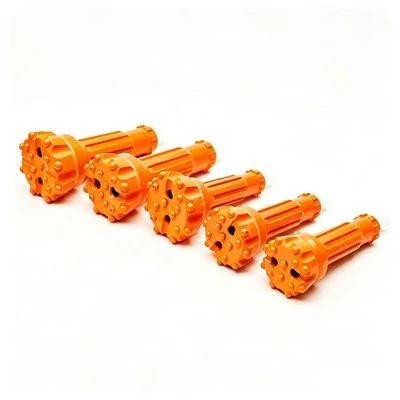
If you’re struggling with inconsistent surface finish in your drilled steel holes, or you’re not sure if you’re using the right drills for the job, we’re here to help. We work with machinists of all sizes to recommend the right tools, adjust processes, and get the hole quality you need without wasting time or money on scrap parts. Reach out to our team to discuss your drilling steel needs, share your current challenges, and we’ll provide tailored solutions that fit your operation.
Shank Adapters References
- Dewhurst, P. (2005). Machinability of Steel: Fundamentals and Applications. SME Publications.
- Astakhov, V. P. (2006). Metal Cutting Theory and Practice. CRC Press.
- ISO 4287:1997. Geometrical Product Specifications (GPS) — Surface texture: Profile method — Terms, definitions and surface texture parameters. International Organization for Standardization.
- Kalpakjian, S., & Schmid, S. R. (2019). Manufacturing Processes for Engineering Materials. Pearson.
Super Rock Machinery Equipment (Qingdao) Co., Ltd.
We are one of the most professional drilling steel manufacturers and suppliers in China, featured by quality products and good price. Please feel free to buy advanced drilling steel for sale here from our factory. Welcome to view our website for more information.
Address: No. 45, Pengwan Road, Qianwan Bonded Port Area, Qingdao Sub-district, Free Trade Pilot Zone, Shandong China
E-mail: sales@superrocktools.com
WebSite: https://www.superrocktools.com/
