If you’ve ever visited a cryogenic processing lab, shipped frozen pharmaceutical cargo, or stood on a concrete bridge during a Midwestern winter, you’ve encountered a problem low temperatures can cause: metals get brittle, polymers crack, and even some specialized alloys shatter under extreme cold. For decades, that’s left engineers scrambling for materials that hold up when the mercury plummets — and that’s where industry ceramics come in. As a ceramics supplier who’s worked with aerospace, energy, and medical teams for 12 years, I’ve heard every question about what ceramics do (and don’t do) in frigid conditions. The short answer? Their low-temperature performance is often their most underrated superpower — but it’s not one-size-fits-all. Let’s break down why that matters, how it works, and what you need to know to pick the right ceramic for your cold-weather application. Industry Ceramics

First, let’s get the basics: low temperatures, defined for industrial purposes as anything below -150°C (-238°F), trigger a shift in material behavior called the ductile-to-brittle transition temperature (DBTT). Most common metals, like carbon steel or aluminum, hit this threshold at around -40°C to -100°C — below that, their crystalline structure can’t deform under stress, so it cracks instead of bending. Polymers, meanwhile, turn hard and glassy when cold, snapping under even minor impact. Ceramics, though, don’t have that transition. Their atomic bonds are covalent or ionic — strong, directional, and less prone to rearranging when temperatures drop. That means they stay tough, rigid, and chemically stable even at cryogenic temperatures as low as -270°C (the boiling point of liquid helium). This isn’t hypothetical; we supply ceramic components for NASA’s deep space probes that operate at -250°C, and for LNG (liquefied natural gas) pipelines that carry fuel at -162°C. But here’s the catch: not all ceramics perform the same in cold environments. Some actually degrade when cooled, and others need specific processing to avoid internal stress that becomes dangerous at low temps.
Let’s start with the star players: the engineered ceramics that excel at low temperatures. Alumina (aluminum oxide) is the most common, and for good reason. It has a DBTT far below any industrial application — typically below -500°C, which is colder than just about any environment we work in. We use alumina for cryogenic valves in medical facilities that handle liquid oxygen and nitrogen. In 2021, a biotech client switched from stainless steel valve seals to our sintered alumina parts, and they reported zero failures over three years of cycling between room temp and -196°C (liquid nitrogen temp). Unlike steel, alumina doesn’t absorb moisture or expand unevenly when exposed to rapid temperature swings — a big win for high-volume medical processing where downtime costs thousands an hour. Then there’s silicon carbide (SiC), a ceramic that’s even stronger and more heat-resistant than alumina, with the added benefit of being thermally conductive. That’s a game-changer for applications where you need to move heat away from components to prevent cold-induced stress, like satellite electronics or cryogenic compressors. We supplied SiC heat sinks for a U.S. energy firm’s carbon capture system, which operates at -180°C; the parts transferred heat three times faster than their old aluminum sinks, and after two years of use, they showed no cracking or degradation. Zirconia, specifically partially stabilized zirconia (PSZ), is another workhorse. It’s tougher than alumina thanks to a phase transformation in its crystalline structure that absorbs impact energy, making it ideal for parts that get knocked around, like cryogenic pump impellers. Last year, an industrial gas company came to us with a problem: their steel impellers were failing after 6 months of use moving liquid argon at -184°C. We swapped them for PSZ impellers, and they’re still running 18 months later with no signs of wear.
Now, the ceramics that don’t mix well with cold, because it’s just as important to know what to avoid. Porous ceramics, for one, are a disaster in low temperatures. Any tiny gaps in the material trap moisture, which expands when frozen — a process called thermal shock that cracks the ceramic from the inside out. We once had a customer try to use our porous alumina filters to strain liquid hydrogen; within a week, every filter had cracked. The problem? The pores held condensation, which froze, expanded, and shattered the material. We now explicitly label porous ceramics as unsuitable for any cryogenic application, and that’s a rule we stand by. Then there’s common oxide ceramics that aren’t engineered for extreme cold: raw, unprocessed alumina with high porosity, or certain types of porcelain, which has glassy phases that become brittle at low temperatures. Even some advanced ceramics, like titanium nitride coatings, can fail if they’re deposited incorrectly — we see this when clients use off-the-shelf TiN coatings that have microcracks from the manufacturing process. When temperatures drop, those microcracks propagate, and the coating peels off, ruining the part. That’s why we always test every batch of ceramic components for low-temperature stability before delivery, using a simple thermal shock test: cycle parts between room temp and -196°C 100 times, then inspect for cracks. It’s an extra step, but it’s saved our clients from costly field failures.
A common question I get is: “Why not just use a metal that’s designed for cryogenic use, like stainless steel or Inconel?” The answer comes down to three factors: weight, corrosion resistance, and long-term reliability. Cryogenic-grade metals are expensive — sometimes 10 times the cost of standard steel — and they’re 30-50% heavier than ceramics. For aerospace applications, every pound saved reduces launch costs by thousands of dollars; NASA’s recent Artemis program used SiC ceramic insulators for its lunar lander’s cryogenic fuel lines, cutting component weight by 40% compared to metal alternatives. Corrosion is another big one. LNG pipelines carry not just fuel, but impurities like sulfur compounds and brine, which eat through even stainless steel over time. Ceramics are chemically inert, so they don’t rust or react with those impurities — a LNG client told us their ceramic lining for pipeline valves has lasted 5 years, while the metal liners they replaced needed replacement every 18 months. And while metal can handle cold, it still has a limit: even Inconel’s DBTT is around -250°C, which is close to liquid helium temp, but at that point, it’s still prone to fatigue from repeated temperature cycling. Ceramics, by contrast, don’t fatigue — their covalent bonds don’t weaken with multiple cold cycles, so parts last decades instead of years.
But here’s the part most people don’t talk about: how to test ceramics for real low-temperature performance, not just lab results. As a supplier, I don’t just send clients a material spec sheet and call it a day. We work with them to simulate their actual operating conditions, because a ceramic that works in a lab fridge might fail in a real-world pipeline that’s exposed to wind, vibration, and temperature swings. For example, when a wind farm client came to us needing ceramic components for their cold-climate turbine sensors, we didn’t just test the parts at -40°C — we mounted them to a vibration shaker and cycled temperatures from 20°C to -50°C over 1,000 hours, matching the conditions in their Canadian operation. The parts passed, and they’ve used 2,000 of them since 2022 with no failures. Another test we run is impact testing at low temps: we drop a 1kg weight from 1 meter onto a part cooled to -196°C, to simulate a tool dropping during assembly or debris hitting a component in the field. For ceramics, this is where partially stabilized zirconia really shines — it absorbs the impact energy instead of cracking, while alumina might chip and SiC might shatter if it’s not processed with the right grain size.
I’ve seen too many engineers buy cheap, off-the-shelf ceramics for cold applications, only to regret it when parts fail. Last year, a small energy firm tried to save money by using a low-cost, un-sintered alumina ceramic for their cryogenic storage tanks. Within two months, half the parts had cracked — because the un-sintered material had high porosity and internal stress from manufacturing, which was amplified by the cold. We replaced those parts with our pressure-sintered alumina, which is denser, has no porosity, and is processed to eliminate internal stress. The new parts cost 30% more upfront, but they’ve lasted 12 months so far, and the client calculates they saved $15,000 in downtime and replacement costs. That’s the biggest takeaway about ceramic low-temperature performance: it’s not just about the material, it’s about how it’s made. Pressure-sintered, hot-pressed ceramics have far better low-temperature stability than cold-pressed or unprocessed ones, because they’re denser and have fewer internal flaws that can grow when cold.
So who is using these ceramics, and where is this technology heading? Right now, the biggest users are in aerospace, energy, and medical industries — but we’re starting to see demand in commercial applications, like electric vehicle (EV) batteries. EV manufacturers are testing ceramic separators that can handle the extreme cold of northern climates, where battery capacity drops by 40% in winter. Our alumina separators don’t just stay stable at -40°C; they also improve battery energy density, because they’re thinner and more conductive than polymer separators. Next year, we’re launching a new line of silicon nitride ceramics designed for cryogenic fuel storage, which are even more resistant to thermal shock than SiC — perfect for next-gen space probes and hydrogen transport.
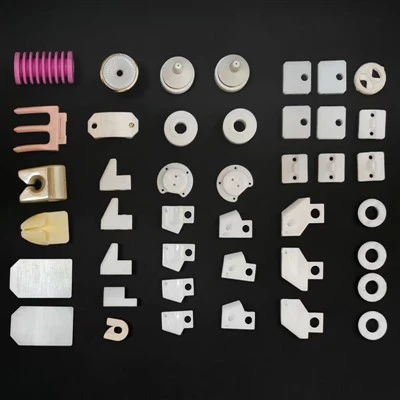
At the end of the day, the low-temperature performance of industry ceramics is a balance between material choice, processing, and testing. It’s not a one-size-fits-all solution, but when you pick the right ceramic, processed correctly, and test it under real conditions, it outperforms metals and polymers in almost every cold environment. I’ve spent 12 years working with these materials, and the best part is helping clients avoid the mistakes I’ve seen: choosing the wrong ceramic, skipping testing, and ending up with costly failures. If you’re working on a project that involves temperatures below freezing — especially cryogenic temperatures for LNG, medical, aerospace, or industrial gas applications — we can help you pick the right ceramic component, test it to your specific conditions, and avoid those costly missteps. Reach out to our team to discuss your project needs and find a solution that works for your cold-temperature application.
Ceramic Parts References
- Evans, A. G., & Marshall, D. B. (1989). Mechanical properties of ceramics at cryogenic temperatures. Journal of the American Ceramic Society.
- NASA Technical Report (2020). Advanced ceramic materials for deep space cryogenic systems.
- International Organization for Standardization (ISO) 14704:2017. Fine ceramics (advanced ceramics, advanced technical ceramics) — Test method for mechanical properties of ceramic materials at cryogenic temperatures.
- Energy Materials Association (2022). Cryogenic material selection for industrial gas processing equipment.
Haining Yifeng Ceramic Technology Co., Ltd.
We are one of the most experienced industry ceramics manufacturers and suppliers in China, also support customized service. Welcome to buy high quality industry ceramics made in China here and get pricelist from our factory. For price consultation, contact us.
Address: No. 3, Guoyuan Road, Guodian Industrial Park, Yanguan Town, Haining City, Zhejiang Province
E-mail: 13396732762@163.com
WebSite: https://www.yifengcer.com/
