DC motors are widely used in various applications, from small toys to large industrial machinery. Controlling the speed, direction, and torque of a DC motor effectively requires a reliable DC motor controller. As a DC Motor Controller supplier, I have extensive experience in this field and would like to share how to program a DC motor controller. DC Motor Controller

Understanding the Basics of DC Motor Controllers
Before diving into programming, it’s essential to understand the fundamental concepts of DC motor controllers. A DC motor controller is an electronic device that manages the power supply to a DC motor to control its operation. There are two main types of DC motor controllers: brushed and brushless.
Brushed DC motors have a simple structure with a commutator and brushes. The controller adjusts the voltage applied to the motor terminals to control its speed. Brushless DC motors, on the other hand, are more complex and require a controller to switch the current in the stator windings precisely to generate rotation.
Selecting the Right Microcontroller
The first step in programming a DC motor controller is selecting the appropriate microcontroller. The choice depends on various factors, such as the required processing power, input/output (I/O) capabilities, and cost. Here are some popular microcontrollers used for DC motor control:
- Arduino: It is an open – source electronics platform with multiple boards available. It is beginner – friendly and has a large community, which provides a wealth of resources for motor control projects.
- Raspberry Pi: This single – board computer offers more processing power than Arduino. It can handle more complex tasks, such as running embedded Linux systems and interfacing with multiple sensors and actuators.
- Microchip PIC microcontrollers: They are known for their low power consumption, high performance, and excellent analog capabilities. They are suitable for a wide range of motor control applications.
Choosing the Control Algorithm
The control algorithm determines how the controller adjusts the motor’s behavior. The most common control algorithms for DC motor control are:
- On – Off Control: This is the simplest control algorithm. The controller turns the motor on or off based on a set threshold. For example, if the desired speed is above a certain value, the motor is turned on; otherwise, it is turned off. While it is easy to implement, it can lead to significant speed fluctuations.
- Proportional (P) Control: In P control, the controller output is proportional to the error between the desired and actual values. For motor speed control, if the actual speed is lower than the desired speed, the controller increases the power supplied to the motor proportionally to the difference.
- Proportional – Integral – Derivative (PID) Control: PID control combines the proportional, integral, and derivative actions. The integral term accumulates the error over time to eliminate steady – state errors, and the derivative term predicts the future error based on its rate of change. PID control provides more accurate and stable control compared to P control.
Implementing the Program
Here is a step – by – step guide on how to implement a simple PID control algorithm for a DC motor using an Arduino board:
Step 1: Hardware Connection
Connect the DC motor to a motor driver that can handle the motor’s power requirements. The motor driver is then connected to the Arduino board. Use appropriate voltage regulators and protection circuits to ensure the safety of the components.
Step 2: Define Variables
// Define the pin connected to the motor driver
const int motorPin = 9;
// Set the desired speed of the motor
const int setpoint = 150;
// PID constants
const float Kp = 1.0;
const float Ki = 0.1;
const float Kd = 0.01;
// Variables to store the error and integral
float error, integral, derivative;
float previousError = 0;
Step 3: Read the Motor Speed
To implement PID control, you need to measure the actual speed of the motor. This can be done using an encoder connected to the motor shaft. The following code reads the encoder pulses and calculates the speed:
// Function to read the encoder pulses
int readEncoder() {
    // Code to read the encoder pulses
    return encoderPulses;
}
Step 4: Implement the PID Algorithm
// Function to calculate the PID output
float calculatePID() {
    int currentSpeed = readEncoder();
    error = setpoint - currentSpeed;
    integral += error;
    derivative = error - previousError;
    float output = Kp * error + Ki * integral + Kd * derivative;
    previousError = error;
    return output;
}
Step 5: Control the Motor
// Function to control the motor speed
void controlMotor(float output) {
    // Limit the output to the valid range
    output = constrain(output, 0, 255);
    analogWrite(motorPin, output);
}
Step 6: Main Loop
void setup() {
    // Initialize the motor pin
    pinMode(motorPin, OUTPUT);
}

void loop() {
    float pidOutput = calculatePID();
    controlMotor(pidOutput);
    delay(10);
}
Tuning the Control Parameters
Tuning the PID parameters (Kp, Ki, and Kd) is crucial to achieving optimal motor control. Here are some general guidelines for tuning:
- Tune Kp first: Increase Kp until the motor responds quickly to changes in the setpoint but without excessive overshoot.
- Add Ki: If there is a steady – state error, increase Ki gradually until the error is eliminated. Be careful not to set Ki too high, as it can cause instability.
- Adjust Kd: If the system has significant oscillations, add a small value of Kd to dampen them.
Testing and Debugging
After programming the DC motor controller, it is important to test and debug the system. Use a multimeter to measure the voltage across the motor terminals and an oscilloscope to analyze the control signals. Check for any abnormal behavior, such as overheating, excessive noise, or unstable speed.
Benefits of Our DC Motor Controllers
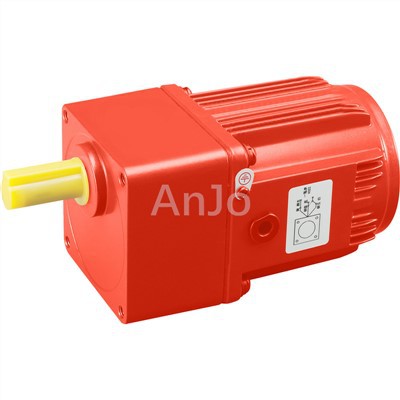
As a leading DC Motor Controller supplier, our products offer several advantages. Our controllers are designed with high – quality components, ensuring reliability and durability. They have a compact design, which is suitable for space – constrained applications. Our controllers also support various control algorithms, allowing for flexible customization according to different user requirements.
Contact Us for Purchase and Negotiation
Micro Gear Motor We understand that each customer has unique needs when it comes to DC motor control. Whether you are working on a small – scale project or a large – scale industrial application, our team of experts can provide you with the most suitable solutions. If you are interested in purchasing our DC motor controllers, or if you have any questions or need further technical support, please feel free to contact our sales team. We are looking forward to establishing a long – term business relationship with you.
References
- Dorf, R. C., & Bishop, R. H. (2016). Modern Control Systems. Pearson.
- Franklin, G. F., Powell, J. D., & Emami – Naeini, A. (2015). Feedback Control of Dynamic Systems. Pearson.
- Arduino official documentation.
- Raspberry Pi official documentation.
Hangzhou ANG Drive Co., Ltd.
We’re well-known as one of the leading dc motor controller manufacturers and suppliers in China, also support custom service. Please feel free to wholesale high quality dc motor controller made in China here from our factory. Contact us for more details.
Address: No.185, Jincheng Rd., Hangzhou 311202, China
E-mail: export6@angdrive.com
WebSite: https://www.angdrive.com/
