Hey there! I’m a supplier of flat wire winding, and today I wanna chat about a super interesting topic: Can flat wire winding improve motor efficiency? Flat Wire Winding
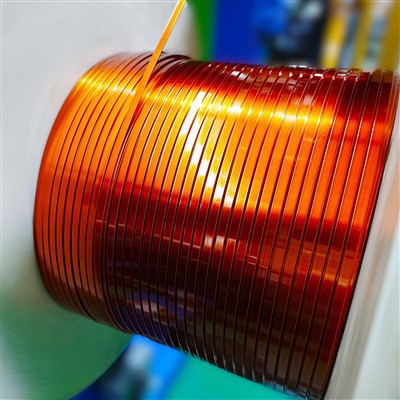
Let’s start with a bit of background. Motors are everywhere in our lives, from the small ones in our smartphones’ vibration functions to the big industrial motors that power factories. Efficiency is a big deal when it comes to motors. Higher efficiency means less energy waste, lower operating costs, and a smaller environmental footprint. So, finding ways to boost motor efficiency is always on the radar of engineers and manufacturers.
Now, let’s dig into flat wire winding. Traditional round wire has been used in motor winding for ages. It’s simple, easy to work with, and has been the go – to option for a long time. But flat wire is starting to change the game.
One of the key advantages of flat wire winding is its space – filling ability. Flat wires can be arranged more tightly in the motor slots compared to round wires. When you think about it, round wires leave a lot of empty space between them. This wasted space doesn’t contribute to the motor’s performance. On the other hand, flat wires can be laid side by side, maximizing the use of the available slot area.
This better space utilization means that more copper can be packed into the same slot volume. Copper is the conductor in the motor windings, and the more copper you have, the lower the resistance of the windings. According to Ohm’s law (V = IR), when the resistance (R) is lower, for a given voltage (V), the current (I) flowing through the windings is more efficient. Less energy is lost as heat due to the lower resistance, which directly translates to an increase in motor efficiency.
Another factor is the skin effect. In high – frequency applications, the skin effect causes the current to flow mostly on the outer surface of the conductor. With round wires, the surface – to – volume ratio is relatively low. Flat wires, however, have a larger surface – to – volume ratio. This means that more of the conductor material is involved in carrying the current, reducing the impact of the skin effect. As a result, the power losses associated with the skin effect are minimized, and the motor runs more efficiently at high frequencies.
Let’s talk about heat dissipation too. Heat is the enemy of motor efficiency. When a motor gets too hot, its performance drops, and the risk of component failure increases. Flat wire windings have a larger surface area exposed to the surrounding environment compared to round wire windings. This larger surface area allows for better heat transfer. The heat generated in the windings can dissipate more quickly into the air or the motor’s cooling system. By keeping the temperature of the windings lower, the motor can operate more efficiently and have a longer lifespan.
I’ve seen some real – world examples where flat wire winding has made a significant difference. In a small electric vehicle project I was involved in, the engineers were struggling to get the range they wanted from the battery – powered motor. After switching to flat wire winding, the motor efficiency increased by about 10%. That translated to a longer driving range on a single charge, which was a huge win for the project.
In an industrial setting, a factory was using a large – scale motor for a production line. The motor was consuming a lot of energy, and the operating costs were through the roof. By replacing the round wire windings with flat wire windings, the motor’s efficiency went up, and the energy consumption decreased by nearly 15%. This not only saved the factory a ton of money on electricity bills but also reduced their carbon emissions.
Of course, there are some challenges with flat wire winding. One of the main issues is the manufacturing process. It’s more complex to wind flat wires compared to round wires. Specialized equipment and skilled operators are required. But as technology advances, the cost and complexity of the manufacturing process are coming down.
Another thing is the initial investment. The equipment for flat wire winding can be more expensive. However, when you consider the long – term savings in energy costs and the improved performance of the motors, the investment can pay off quickly.
So, to answer the question: Can flat wire winding improve motor efficiency? The answer is a resounding yes! It offers numerous benefits in terms of space utilization, reducing the skin effect, and better heat dissipation.
If you’re in the market for motors or motor components and want to improve efficiency, I’d love to talk to you. Whether you’re an engineer working on a new project, a manufacturer looking to upgrade your existing motors, or someone involved in an energy – saving initiative, flat wire winding could be the solution you’ve been looking for. Reach out to me, and we can have a chat about how flat wire winding can meet your specific needs.
Continuously Transposed Conductors References
- "Electric Motors and Drives: Fundamentals, Types and Applications" by Austin Hughes and Bill Drury
- "Motor Efficiency Improvement and Energy Savings" by the U.S. Department of Energy
Tianjin Jingwei Power Technology Co., Ltd.
As one of the most professional flat wire winding manufacturers and suppliers in China, we’re featured by quality products and good service. Please rest assured to buy durable flat wire winding made in China here from our factory. Contact us for more details.
Address: No.1 Chuangxin Rd. Xiaozhan Industrial Park, Jinnan District, Tianjin, China
E-mail: info@jwdc.cn
WebSite: https://www.jw-dcs.com/
