When I first started working as a steel strip supplier over a decade ago, I used to think that all steel strips were essentially the same—just thin, flat metal rolls that got the job done for whatever project a customer had. I’d make a sale, send the product out, and rarely hear back about whether it performed as expected. That changed about five years into my career, when a local manufacturing client reached out with a major problem: their custom steel strips kept cracking during the deep drawing process they used to make automotive body panels. Turns out, they’d been buying the cheapest steel strip they could find, not realizing the composition was entirely wrong for their application. That conversation was a wake-up call for me—one that taught me the composition of steel strip isn’t just a technical detail; it’s the foundation of every property that makes a strip useful, or useless, for a given job. Steel Strip
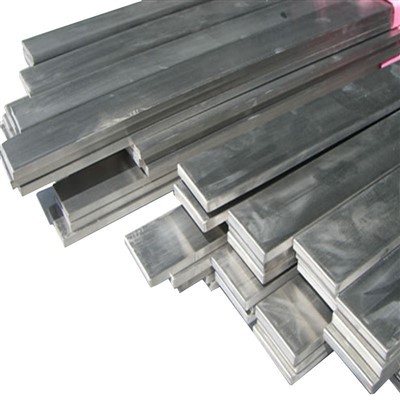
Today, when a customer walks through our warehouse or calls to inquire about steel strip, the first thing we don’t talk about is price. We talk about what they’re going to use the strip for: are they making enclosures for electronic devices that need to resist rust? Are they fabricating pipes that will carry corrosive chemicals? Are they stamping small, precise parts that require sharp, clean edges? Every one of those answers ties back to the mix of elements in the steel strip’s composition, and how those elements shape its mechanical, physical, and processing properties. Let’s break this down, because it’s not just about listing elements—it’s about understanding how each one matters.
The base of every steel strip is iron, obviously. But pure iron is soft, brittle, and almost impossible to work with for most industrial purposes. That’s where carbon comes in—the single most impactful element in steel strip composition. The amount of carbon, measured in weight percent, is what categorizes steel into low, medium, and high carbon grades. For example, low carbon steel (also called mild steel) has between 0.05% and 0.25% carbon. When we supply low carbon steel strip, it’s incredibly ductile—meaning it can bend, stretch, and form into complex shapes without cracking. That’s exactly what a customer needs if they’re making kitchen appliances, or metal furniture, where forming is key. But low carbon steel is also weak, with low tensile strength. That’s why we’d never recommend it for structural steel strip used in building frameworks or heavy machinery parts. For those, medium carbon steel (0.25% to 0.55% carbon) is a better fit. It’s stronger and more durable, though a little less ductile than low carbon. High carbon steel, with 0.55% to 2.0% carbon, is our hardest and most rigid steel strip—used for things like cutting tools, springs, and high-wear parts. But here’s the catch: high carbon steel is so brittle that it can snap if you try to bend it too far, which makes it useless for any application that requires shaping after fabrication. I’ve had customers come to us wanting a steel strip for a project that needs both strength and formability, and they’re shocked when I explain they can’t have both at the same carbon level—you have to balance it.
Beyond carbon, there are other alloying elements that we carefully adjust in our steel strip composition to tailor properties. Manganese is one of the most common, and it does double duty. First, it acts as a deoxidizer, removing excess oxygen from the molten iron to prevent defects in the finished strip. Second, it increases both strength and hardness without making the steel too brittle. For a customer making automotive components that need to withstand impact, manganese is non-negotiable. We also add small amounts of manganese to low carbon steel to boost its strength just enough for uses like structural supports, without sacrificing the formability that makes mild steel useful.
Then there’s silicon. Most people don’t hear much about silicon in steel, but it’s essential for electrical steel strips—those thin, grain-oriented strips used in transformers and electric motors. Silicon increases electrical resistance, which reduces energy loss when electricity flows through the steel. If we supplied a standard carbon steel strip to a customer making transformers, their device would overheat and waste power, which is why we have a specialized grade with high silicon content that’s perfect for electrical applications. That’s a specific example of how composition directly ties to a product’s intended use.
But it’s not just the elements we add that matter—it’s the impurities we keep out. Sulfur and phosphorus are two elements that most steel suppliers try to limit, because they can ruin a steel strip’s performance. Sulfur, for example, causes hot shortness: a condition where the steel becomes brittle when it’s hot, so it can’t be formed at high temperatures without cracking. A few years ago, we had a customer who tried to use a low-grade steel strip we’d sourced from a new supplier for their hot stamping process. They called us in a panic, saying every third strip cracked during heating, and we traced it back to a sulfur content that was 0.05% instead of our standard 0.03% maximum. That’s when I learned that even small deviations in impurity levels can have big consequences, which is why we test every batch of steel strip we supply to make sure sulfur and phosphorus are within strict limits.
Chromium is another alloying element that’s a game-changer for corrosion resistance. When we add 10.5% or more chromium to steel, it creates a thin, invisible oxide layer on the surface that prevents rust from forming. That’s stainless steel strip, of course, and it’s one of our most popular products for customers making food processing equipment, medical devices, or outdoor structures. But not all stainless steel is the same, either. Austenitic stainless steel, which has high chromium and nickel, is extremely ductile and easy to weld—perfect for kitchen sinks or food trays. Ferritic stainless steel, with less nickel and more chromium, is a little less ductile but cheaper, making it great for automotive trim that doesn’t need extensive forming. Even within stainless, the composition dictates whether a strip will work for a given job. I once had a customer who tried to use ferritic stainless steel for a custom metal stamping project, only to find it cracked when they tried to bend it into a tight curve. Switching to austenitic stainless steel, with a slightly different composition, fixed the problem immediately.
Nickel is another key alloying element, especially in stainless steel, but also in some high-strength low-alloy (HSLA) steel strips. HSLA steels have small amounts of elements like vanadium, niobium, and titanium added to refine the grain structure of the steel, which boosts strength without adding a lot of carbon. That means we can supply a steel strip that’s as strong as medium carbon steel but still ductile enough to form into complex shapes—ideal for construction parts, truck frames, and agricultural equipment. Nickel also improves toughness at low temperatures, which is critical for customers working in cold climates. A farmer in northern Minnesota once told us that the steel strips he used for plow blades would snap in winter, so we switched him to a HSLA steel with added nickel, and he said they lasted three times longer without breaking.
What I’ve learned over the years is that every customer’s needs are unique, and there’s no one-size-fits-all when it comes to steel strip composition. A startup making smartphone brackets needs a thin, ductile steel strip that can be precision stamped, with a smooth surface that’s easy to coat. A construction company needs a thick, high-strength steel strip that can withstand heavy loads, with good weldability. A food manufacturer needs a corrosion-resistant, easy-to-clean steel strip that meets food safety standards. Each of these requires a different mix of elements, and as a steel strip supplier, my job is to match the composition to the application, not just push the cheapest product.
I also work closely with customers to explain these choices, because many of them don’t have a background in metallurgy. I remember a small business owner who was making custom metal signs, and he kept buying cheap steel strip that would rust within a year. When I told him why—because his steel had no chromium to form a protective layer—he switched to a galvanized steel strip, which has a zinc coating added during composition, and his signs now last for years. That’s the kind of difference that good composition makes.
Of course, composition isn’t the only factor in steel strip performance—processing, heat treatment, and surface preparation matter too—but it’s the foundation. If the composition is wrong, no amount of post-processing can fix a steel strip that’s too brittle, too weak, or too prone to corrosion. That’s why we invest so much in testing our raw materials and monitoring every step of our production process to ensure the composition of every steel strip we supply is consistent and tailored to the customer’s needs.
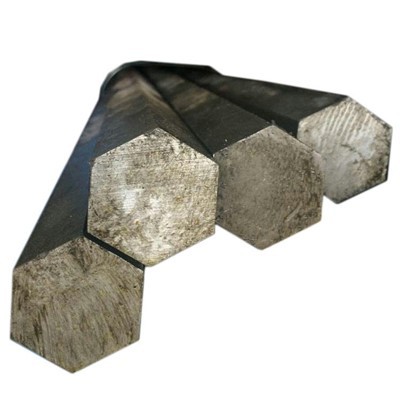
If you’re working on a project that uses steel strip, whether it’s automotive parts, electronics, construction, or consumer goods, don’t just go for the cheapest option. Talk to someone who understands how composition affects properties, and make sure you’re choosing a steel strip that’s right for your application. If you’re looking for a reliable steel strip supplier that can help you select the right grade, test batches to meet your specifications, and deliver consistent, high-quality product, reach out to us to discuss your needs. We’re here to help you avoid the costly mistakes that come from choosing the wrong steel strip composition, and to make sure your project succeeds.
Carbon Steel Bar References
- ASTM International. (2021). Standard Specification for Steel Strip, Carbon, Cold-Rolled. ASTM A366/A366M-21.
- Degarmo, E. P., Black, J. T., & Kohser, R. A. (2020). Materials and Processes in Manufacturing (13th ed.). John Wiley & Sons.
- The Making, Shaping, and Treating of Steel. (2019). Association for Iron and Steel Technology.
- ASTM International. (2022). Standard Specification for Stainless Steel Strip, Cold-Rolled. ASTM A666/A666M-22.
- Brandes, E. A., & Brook, G. B. (Eds.). (2012). Smithells Metals Reference Book (8th ed.). Butterworth-Heinemann.
Shanxi Midas Industrial Co., Ltd.
We’re known as one of the most professional steel strip manufacturers and suppliers in China. With abundant experience, we warmly welcome you to buy cheap steel strip made in China here from our factory. For price consultation, contact us.
Address: 28th, Huanqiu Jinrong Zhongxin, Xieyuan Road, Changfeng Business District, Taiyuan City, Shanxi Province, China
E-mail: midassteel@163.com
WebSite: https://www.midassteel.com/
