Hey guys, let’s cut to the chase—if you’re here, you’re either a factory manager weighing adding a steel platform with stair to your warehouse layout, a construction coordinator scoping a mezzanine for a retail storage spot, or maybe even a small business owner curious about how these setups hold up when the wind picks up. I get it—wind resistance isn’t just some random spec number you can ignore; if your platform’s sitting outdoors or even near high-traffic areas with gusts, skipping that check could lead to wobbly stair railings, loose decking, way worse. And as someone who’s been supplying steel platforms with stairs for 12 years now, I’ve seen way too many clients hit snags because they didn’t dig into this part first. Steel Platform with Stair
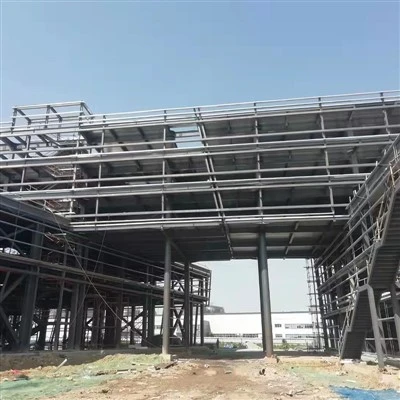
First off, let’s bust a myth right away: there’s no one-size-fits-all “wind resistance rating” for every steel platform with a stair. I’ve had clients message me saying “I need a 120 mph rating”—but that’s not something you just pull out of thin air. It’s all tied to a bunch of factors that change per project, not just the steel itself. Let’s start with the basics: what even is a wind resistance rating for these setups? It’s basically a measurement of how much horizontal force a platform (plus its stair, railings, and any gear stored on it) can handle before it starts shifting, warping, or failing. We use industry standards to calculate this, not guesswork, and that’s where things get real for your specific space.
Let’s break down the big factors that shape a steel platform with stair’s wind rating, because this is where most folks go wrong when they’re shopping around. First up: your location. If your platform’s going in Wichita, KS, that’s way different than Miami, FL, right? The wind speeds there are worlds apart, so the rating’s gonna adjust. We reference ASCE 7-16, that’s the go-to standard for wind loads in the US, and it takes into account things like basic wind speed for your region, terrain roughness (is your warehouse in a flat, open field, or nestled between two brick buildings?), even the height of your platform. If your platform’s 20 feet up, wind speeds there are way higher than ground level—so the rating has to go up to match that. I had a client last year who tried to get a cheap deal on a platform for his rooftop storage; he skipped checking local wind specs and ended up with a unit that failed a 90 mph test, not the 110 mph his city required. That’s a $8k mistake he didn’t need to make.
Next factor: the platform and stair design itself. Wait, you might think steel’s steel, so all designs are equal—nope. If your platform’s a solid, fully welded steel deck vs. a slotted or open-grid deck, that changes wind load. Open grid lets some wind pass through, so it’s better for windy areas, but if you’re storing heavy pallets, solid deck’s necessary. Then there’s the stair: is it a straight run or a spiral? Spiral stairs catch more wind force, so we have to bump the rating a little to compensate. Also, how your platform’s anchored to the building or ground? If it’s bolted to existing structural columns vs. sitting on concrete footings, that anchorage strength directly impacts wind resistance. We always add extra bracing for high-wind areas—cross-braces on the platform’s sides, reinforcement along the stair stringers—those small tweaks make a huge difference. I’ve built platforms for coastal facilities where we use thicker steel for the main beams and add secondary bracing just for wind, and those have held up through hurricanes no problem.
Then there’s the stuff that sits on the platform—load weight matters a lot. If your platform’s only for light storage (like boxes of office supplies), the wind rating can be lower, but if it’s holding 2,000 lb pallets of metal parts, the added weight can actually help counteract wind force. Wait, that’s a weird one, right? But it’s true—heavier loads mean more downward force, so the platform is less likely to tip or shift when wind hits sideways. But if you’re expecting to have empty space on the platform sometimes, we still have to calculate for wind when it’s unloaded, because that’s when the platform’s most vulnerable. I once had a client who planned to use his platform only for seasonal inventory, so he thought he could cut the rating. Turned out, when the warehouse was empty between holiday seasons, a gust came through and wiggled the stair so bad a worker almost got hurt. We ended up retrofitting with extra bracing for free (luckily it was early on, before the full install) and that’s a mistake we now flag for every seasonal-use platform.
Now, how do we actually assign a concrete number? Most of the time, we don’t just slap a rating on a unit out of the box. We do two things: first, calculate the design wind load using ASCE 7, then translate that into a “rated” wind speed, like 100 mph, 120 mph, etc. But it’s not just a number on a spec sheet—we test prototypes too. We’ve got a small test rig at our warehouse where we can simulate wind force by applying controlled horizontal pressure to a finished platform with stair, and check for deflection, loose bolts, anything that’d be a problem in real use. For example, last year we did a project for a wind farm in West Texas—super windy area, so we built a platform with a stair to access turbine control boxes. We ran the test at 130 mph (that’s the local basic wind speed there) and had zero deflection, so we rated it for 135 mph to give extra safety margin—you always want that, right? No one wants to push a platform to its absolute limit.
Wait, let’s talk about common mistakes people make here. A lot of budget-focused buyers will go for the cheapest steel platform with stair, without asking for the wind calculation. Then they end up with a unit that’s only rated for 80 mph, but their area needs 110, or they’re storing heavy gear. I’ve seen cheap imports that use thin steel, no proper bracing, so even at 90 mph, the stair railings bend. Another mistake: ignoring building codes. A lot of cities have specific requirements for mezzanines and outdoor structures—if you don’t meet those, you might not pass a building inspection, which means you can’t use your platform until you fix it. I had a client in Chicago who skipped checking the city code, which required a 115 mph rating, and his original unit was only 95. We had to rework the bracing and upgrade the stair stringers, but it was way cheaper than getting fined and having the platform torn down.
Also, let’s clarify: steel platforms with stairs used indoors vs outdoors. Indoors, you’re dealing with way less wind force, so ratings are lower—usually 80-100 mph, depending on the building’s location. If your warehouse is indoors but near a big loading dock where doors open, that’s a different story too—wind can rush through the bay, so we still adjust the rating. Outdoors, though, it’s a whole other ballgame. Coastal areas, plains, mountain towns—all need higher ratings, sometimes up to 150 mph or more, depending on extreme weather risks like hurricanes or tornadoes.
Here’s the thing: when you’re buying a steel platform with stair, the wind resistance rating isn’t just a random box to check. It’s what keeps your team safe, your inventory intact, and your investment from going to waste. At our shop, we don’t just sell a pre-made unit—we work with you to figure out exactly what you need. If you send us your location, how high you want the platform, what you’ll store on it, and where it’s going (indoor, outdoor, near other structures), we can run the wind calculation, build the platform with stair that fits that exact rating, and even send over test data if you need it for inspections.
Wait, let’s give a quick example to make this real. Last quarter, a client from Atlanta reached out—he wanted a 12 ft high steel platform with a 4 ft wide stair, to store retail apparel above his main store. His local basic wind speed is 90 mph, terrain is flat (downtown Atlanta, no big buildings blocking wind), and the platform would hold about 1,500 lb of boxes, max. We calculated the wind load, added 15% safety margin, so we built it to a 105 mph rating. That worked perfectly—he passed his inspection on the first try, and when a thunderstorm hit last month, his platform had zero issues, no wobble, nothing. He told us later he almost went with a cheaper unit that was only rated 90, and he’s glad he reached out to us first to get the right spec.
Another example: a client in Denver, wanting a 18 ft high outdoor platform to access a water treatment tank. Denver’s wind speeds are higher—105 mph basic, and it’s a flat, open area, so we bumped up the rating to 120 mph, added extra cross-braces on the stair to handle the wind catching on the open stringers. That’s been up for 6 months now, no problems at all.
So, to wrap this up: there’s no generic “wind resistance rating” for a steel platform with stair. It’s custom-tailored to your project, based on location, design, load, and building codes. And if you skip doing this right, you’re rolling the dice on safety and money.
If you’re currently planning a steel platform with stair for your space, don’t guess—reach out, and we can walk you through the whole process. We’ll ask you a few quick questions about your project, run the accurate wind calculation, build a unit that meets (or exceeds) all local codes, and make sure it’s safe for whatever you need it to do. No jargon, no hidden fees, just straight-up advice from folks who’ve been doing this long enough to know what works in different wind zones.
Tubular Truss References:
- American Society of Civil Engineers. (2016). Minimum Design Loads and Associated Criteria for Buildings and Other Structures (ASCE/SEI 7-16). American Society of Civil Engineers.
- Steel Fabricators Association. (2022). Design Guidelines for Commercial Steel Mezzanines and Stair Structures. Steel Fabricators Association.
- International Code Council. (2021). International Building Code (IBC) Chapter 16: Structural Design. International Code Council.
Suzhou Wanyu Steel Structure Construction and Installation Engineering Co., Ltd.
With abundant experience, we are one of the most professional steel platform with stair manufacturers and suppliers in China. We warmly welcome you to buy customized steel platform with stair at competitive price from our factory. If you have any enquiry about pricelist, please feel free to email us.
Address: No. 78, Putian Road, Suzhou Industrial Park, Suzhou, Jiangsu Province
E-mail: Zhu@szwanyu.com
WebSite: https://www.wy-metalstructure.com/
