As a seasoned supplier in the stamping die industry, I’ve witnessed firsthand the intricate interplay of various factors that determine the cost of a stamping die. Understanding these factors is crucial for both manufacturers and customers, as it allows for informed decision-making and effective cost management. In this blog post, I’ll delve into the key elements that influence the cost of a stamping die, offering insights based on my years of experience in the field. Stamping Die

Material Selection
The choice of materials is one of the most significant factors affecting the cost of a stamping die. Different materials possess varying properties, such as hardness, toughness, and wear resistance, which directly impact the die’s performance and lifespan. High-quality materials, such as tool steels and carbide, are often more expensive due to their superior characteristics. However, they can also provide longer service life and better performance, reducing the need for frequent replacements and ultimately saving costs in the long run.
For instance, tool steels like D2 and A2 are commonly used for stamping dies due to their high hardness and wear resistance. These steels can withstand the high pressures and stresses involved in the stamping process, making them suitable for producing large quantities of parts. On the other hand, carbide materials, such as tungsten carbide, offer exceptional hardness and wear resistance, making them ideal for applications requiring high precision and long tool life. However, carbide materials are significantly more expensive than tool steels, and their use may not be cost-effective for all applications.
In addition to the type of material, the size and shape of the die also play a role in determining the material cost. Larger dies require more material, which increases the overall cost. Similarly, complex die shapes may require more machining and finishing operations, further adding to the cost.
Design Complexity
The design of a stamping die is another critical factor that influences its cost. Complex die designs require more time and effort to develop, resulting in higher design and engineering costs. Additionally, complex designs may require specialized manufacturing processes and equipment, which can also increase the cost.
For example, a simple single-stage die that performs a single stamping operation is relatively easy to design and manufacture, and therefore, it tends to be less expensive. On the other hand, a progressive die that performs multiple stamping operations in a single pass is more complex and requires a more sophisticated design. Progressive dies are commonly used for high-volume production of complex parts, but they can be significantly more expensive than single-stage dies.
Another aspect of design complexity is the inclusion of special features or functions in the die. For instance, a die with a built-in cutting mechanism or a precision alignment system may require additional design and manufacturing steps, increasing the cost. Similarly, dies that are designed to produce parts with tight tolerances or complex geometries may require more advanced machining and finishing techniques, further adding to the cost.
Manufacturing Processes
The manufacturing processes used to produce a stamping die also have a significant impact on its cost. Different manufacturing processes have different levels of complexity, precision, and efficiency, which directly affect the cost of production.
One of the most common manufacturing processes for stamping dies is machining. Machining involves the use of cutting tools to remove material from a workpiece to create the desired shape. Common machining processes include milling, turning, drilling, and grinding. The choice of machining process depends on the material, size, and complexity of the die. For example, milling is often used for creating complex shapes and contours, while turning is commonly used for producing cylindrical parts.
In addition to machining, other manufacturing processes such as electrical discharge machining (EDM), wire EDM, and laser cutting may also be used to produce stamping dies. These processes offer high precision and can be used to create complex shapes and features that are difficult or impossible to achieve with traditional machining methods. However, they are generally more expensive than traditional machining processes due to the specialized equipment and materials required.
The level of automation used in the manufacturing process also affects the cost. Automated manufacturing processes, such as computer numerical control (CNC) machining, can significantly reduce labor costs and improve production efficiency. However, the initial investment in CNC equipment and programming can be substantial, which may increase the overall cost of the die.
Quantity and Volume
The quantity and volume of parts to be produced using the stamping die also play a role in determining its cost. Generally, the cost per die decreases as the quantity of parts to be produced increases. This is because the fixed costs associated with die design, engineering, and manufacturing are spread over a larger number of parts.
For example, if a customer requires a small quantity of parts, say 100 pieces, the cost per die may be relatively high. This is because the fixed costs of die production, such as design, machining, and testing, are significant compared to the number of parts to be produced. On the other hand, if the customer requires a large quantity of parts, say 100,000 pieces, the cost per die is likely to be much lower. This is because the fixed costs are spread over a larger number of parts, resulting in a lower cost per part.
In addition to the quantity of parts, the production volume also affects the cost. High-volume production requires dies that are designed for long-term use and can withstand the wear and tear of continuous operation. These dies may require more expensive materials and manufacturing processes to ensure their durability and reliability. On the other hand, low-volume production may allow for the use of less expensive materials and simpler manufacturing processes, resulting in lower die costs.
Quality and Tolerance Requirements
The quality and tolerance requirements of the parts to be produced using the stamping die also influence its cost. Higher quality and tighter tolerances generally require more precise manufacturing processes and higher-quality materials, which can increase the cost of the die.
For example, if a customer requires parts with very tight dimensional tolerances, say ±0.001 inches, the stamping die must be manufactured with extremely high precision. This may require the use of advanced machining techniques, such as CNC machining or EDM, and the selection of high-quality materials with excellent dimensional stability. These factors can significantly increase the cost of the die.
Similarly, if the customer requires parts with a high surface finish or specific mechanical properties, the stamping die must be designed and manufactured to meet these requirements. This may involve additional processing steps, such as polishing or heat treatment, which can also add to the cost.
Lead Time
The lead time required for the production of a stamping die is another factor that can affect its cost. Short lead times often require expedited manufacturing processes, which can be more expensive due to the additional resources and labor required.
For example, if a customer needs a stamping die to be delivered within a very short period, say two weeks, the manufacturer may need to prioritize the production of the die and allocate additional resources to ensure its timely completion. This may involve working overtime, using faster manufacturing processes, or paying premium prices for materials and components. All these factors can increase the cost of the die.
On the other hand, if the customer can allow for a longer lead time, say six to eight weeks, the manufacturer can plan the production process more efficiently and use more cost-effective manufacturing methods. This can result in a lower cost for the die.
Conclusion
In conclusion, the cost of a stamping die is influenced by a variety of factors, including material selection, design complexity, manufacturing processes, quantity and volume, quality and tolerance requirements, and lead time. As a stamping die supplier, it is our responsibility to work closely with our customers to understand their specific needs and requirements and to provide them with the most cost-effective solutions.
By considering all these factors and making informed decisions, we can help our customers optimize their die costs without compromising on quality or performance. Whether you are a small-scale manufacturer looking for a simple single-stage die or a large-scale production facility in need of a complex progressive die, we have the expertise and experience to meet your needs.
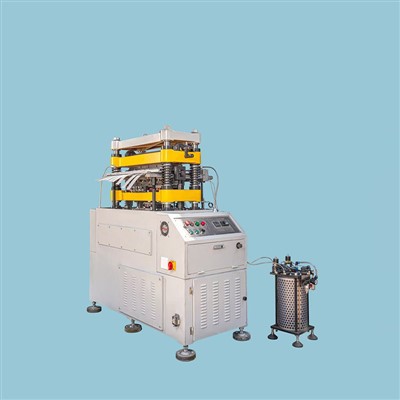
Fin Forming Machine If you are interested in learning more about our stamping die products and services or would like to discuss a specific project, please feel free to contact us. We look forward to working with you to achieve your manufacturing goals.
References
- "Tool and Manufacturing Engineers Handbook," Society of Manufacturing Engineers.
- "Metal Stamping Handbook," Industrial Press.
- "Die Design Handbook," Society of Manufacturing Engineers.
Suichang Lvye Machinery Co., Ltd.
We are one of the most professional stamping die manufacturers in China, also support customized service with low price. We warmly welcome you to buy discount stamping die for sale here from our factory. If you have any enquiry about quotation, please feel free to email us.
Address: No. 402, Mudanting East Road, Miaogao Street, Suichang County, Lishui City, Zhejiang Province
E-mail: L528753@outlook.com
WebSite: https://www.suichanglvye.com/
